
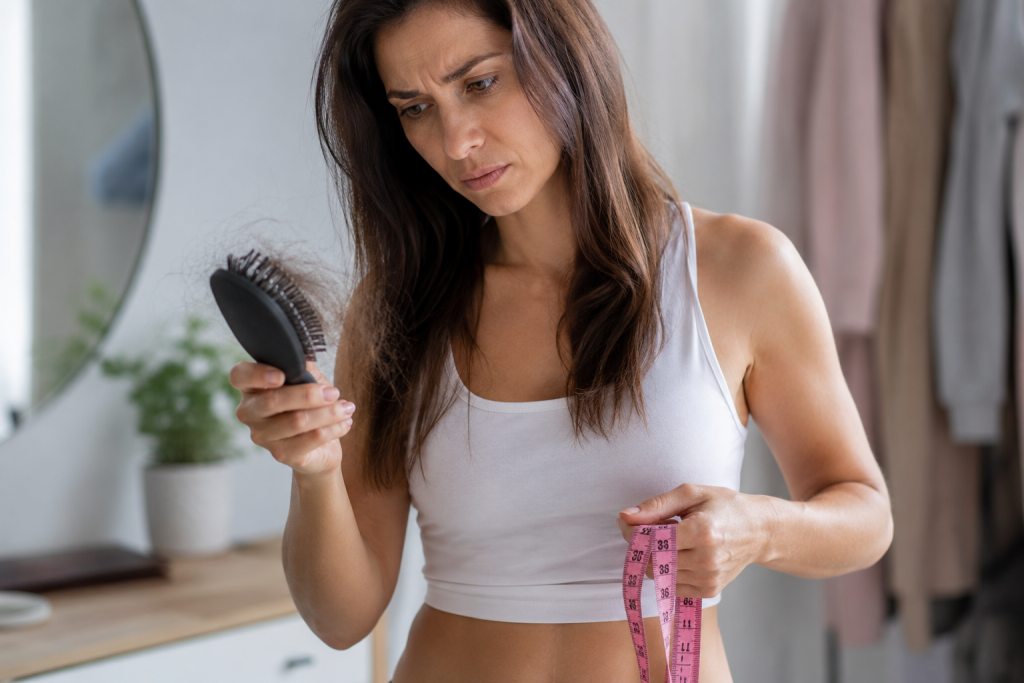
Losing weight can bring a wide range of health benefits, from improved energy levels and mobility to better metabolic health and confidence.
However, many women are surprised to discover an unexpected side effect after significant weight loss: increased hair shedding.
If you’ve recently lost weight and noticed more hair in your brush, shower drain, or on your pillow, you’re certainly not alone.
The good news is that hair loss after weight loss is often temporary. Understanding why it happens can help you take the right steps to support healthy hair growth moving forward.
Can Weight Loss Cause Hair Loss?
Yes.
Rapid or significant weight loss can sometimes trigger a condition known as telogen effluvium.
Telogen effluvium occurs when a larger-than-normal number of hair follicles enter the resting phase of the hair growth cycle. Several weeks or months later, these hairs are shed, leading to noticeable thinning and increased hair fall.
The condition is commonly triggered by physical or emotional stress on the body, including:
- Rapid weight loss
- Major dietary changes
- Illness or surgery
- Hormonal fluctuations
- Significant emotional stress
While seeing extra hair fall can be alarming, telogen effluvium is typically temporary and often resolves once the underlying trigger has been addressed.
Why Does Hair Loss Happen After Losing Weight?
There are several reasons why hair shedding may occur following weight loss.
Calorie Restriction
Hair growth requires energy.
When calorie intake drops significantly, the body prioritises essential functions over non-essential processes such as hair growth.
As a result, more hair follicles may shift into the resting phase, leading to increased shedding several months later.
Nutritional Deficiencies
Some weight loss plans can unintentionally reduce the intake of nutrients that support healthy hair growth.
Common nutritional factors associated with hair health include:
- Protein
- Iron
- Zinc
- Biotin
- Vitamin D
- B vitamins
If dietary intake becomes insufficient, hair quality and growth may be affected.
Rapid Weight Loss
In many cases, the speed of weight loss appears to be more important than the amount lost.
Losing a large amount of weight in a relatively short period may place additional stress on the body, increasing the likelihood of temporary hair shedding.
Hormonal Changes
Weight loss can influence hormone levels throughout the body.
Because hormones play an important role in the hair growth cycle, these changes may contribute to temporary periods of increased shedding in some women.
How Long After Weight Loss Does Hair Loss Start?
One of the most confusing aspects of telogen effluvium is the delay between the trigger and the shedding.
Many women assume their hair loss is unrelated to weight loss because the shedding often begins two to four months after the weight has been lost.
This delay occurs because hair follicles need time to move through the growth cycle before shedding becomes noticeable.
As a result, the connection between weight loss and hair shedding is not always immediately obvious.
Is Ozempic Causing Hair Loss?
This is a question many women are asking.
While medications such as Ozempic are often blamed for hair loss, many experts believe the shedding may actually be linked to the rapid weight loss that commonly occurs while using these medications.
If you’re taking Ozempic and experiencing increased hair shedding, you may find our article on Ozempic hair loss in women helpful.
Will My Hair Grow Back?
In most cases, yes.
Telogen effluvium is generally considered a temporary condition.
Once the body adapts and nutritional intake improves, hair follicles often return to their normal growth cycle.
Many women begin noticing improvements within several months, although full recovery can take longer depending on individual circumstances.
Patience is often required, as hair grows relatively slowly.
How Can You Support Hair Growth After Weight Loss?
While there is no overnight solution, there are several practical steps that may help support healthy hair growth.
Prioritise Protein Intake
Hair is primarily made from a protein called keratin.
Ensuring adequate protein intake may help support normal hair growth and maintenance.
Focus on Nutrient-Dense Foods
A balanced diet containing a variety of vitamins, minerals, healthy fats, and quality protein sources can help support overall hair health.
Avoid Crash Diets
Slow, sustainable weight loss is generally easier on the body than extreme calorie restriction.
Gradual approaches may reduce the likelihood of triggering stress-related shedding.
Consider Nutritional Hair Support
Some women choose to support their hair through dedicated nutritional supplements, particularly during periods of increased shedding or dietary change.
Products containing ingredients such as biotin, zinc, saw palmetto, pumpkin seed extract, horsetail extract, and other hair-support nutrients are commonly used as part of a broader hair care routine.
When Should You Seek Advice?
Although temporary shedding is common after significant weight loss, it is worth seeking professional advice if you notice:
- Persistent hair thinning lasting more than six months
- Bald patches
- Scalp irritation
- Symptoms of nutritional deficiency
- A widening parting or progressive thinning
A healthcare professional can help identify whether another underlying cause may be contributing to the problem.
The Bottom Line
Hair loss after weight loss can be frustrating, especially when you’re feeling positive about your progress.
In many cases, however, the shedding is a temporary response to the physical stress associated with rapid weight loss, calorie restriction, or nutritional changes.
By focusing on a balanced diet, supporting your nutritional intake, and allowing time for the hair growth cycle to recover, most women can expect shedding to improve over time.
If you’re concerned about female hair loss more generally, you may also find the guide to the most common causes of hair loss in women useful.
Leave a Reply