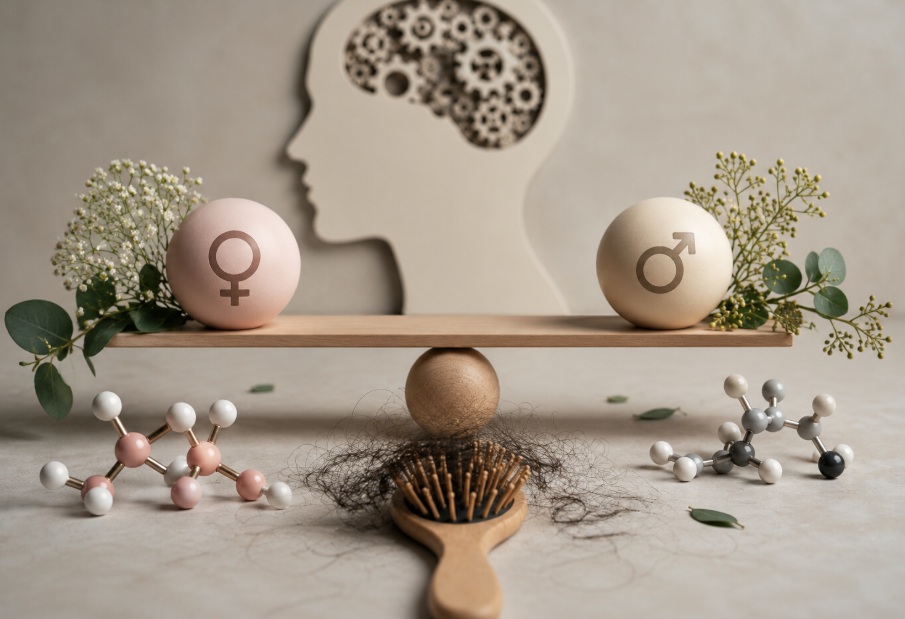
Many women blame stress, ageing or poor hair products when they first notice their hair becoming thinner.
While these factors can certainly play a role, hormones are often the hidden culprit.
Hormonal hair loss can develop gradually over months or even years, making it easy to dismiss the early warning signs. Unfortunately, by the time many women seek help, significant thinning has already occurred.
So how can you tell whether your hormones may be affecting your hair?
Here are seven common signs that your hair loss could be hormonal.
1. Your Hair Is Thinning Around the Parting
One of the most common signs of hormonal hair loss in women is a widening parting.
Rather than developing a receding hairline like many men, women often notice that the scalp becomes increasingly visible along the centre parting.
You may find yourself styling your hair differently, using volumising products more frequently, or becoming increasingly aware of your scalp under bright lighting.
This pattern is commonly associated with female pattern hair loss, which is influenced by hormones and genetics.
2. Your Hair Loss Started Around Menopause
Menopause is one of the biggest hormonal changes a woman will experience.
As oestrogen levels decline, hair growth can slow, individual strands may become finer, and overall density can decrease.
Many women report that their hair suddenly feels less substantial than it once did.
If your thinning hair coincided with your late forties or fifties, hormonal changes may be contributing to the problem.
3. Your Menstrual Cycle Has Changed
Changes in your menstrual cycle can sometimes accompany hormonal hair loss.
You may have noticed:
- Irregular periods
- Heavier periods
- Missed periods
- Changes in cycle length
These changes can indicate hormonal fluctuations that may also affect the hair growth cycle.
If hair loss and menstrual changes have appeared around the same time, it may be worth discussing this with your doctor.
4. You’re Experiencing Unexplained Facial Hair Growth
While it may seem contradictory, some women experience thinning hair on the scalp while developing increased facial hair.
This can occur when androgen levels become elevated.
Signs may include:
- Increased chin hair
- Upper lip hair
- Coarser facial hair
- More frequent hair removal requirements
Conditions such as PCOS (Polycystic Ovary Syndrome) can sometimes contribute to both scalp hair thinning and unwanted facial hair growth.
5. Your Hair Has Become Noticeably Finer
Hormonal hair loss doesn’t always involve dramatic shedding.
Sometimes the change is more subtle.
Many women find that their ponytail becomes thinner, hairstyles no longer hold their volume, or their hair simply feels less substantial than it once did.
This gradual miniaturisation of the hair follicles is commonly associated with hormone-related thinning.
6. You Have Other Symptoms Alongside Hair Loss
Hormones affect far more than just your hair.
Depending on the underlying cause, you may also experience:
- Fatigue
- Weight changes
- Mood fluctuations
- Hot flushes
- Sleep disturbances
- Low libido
- Dry skin
When hair loss appears alongside several other symptoms, it can provide important clues about what may be happening internally.
7. Female Hair Loss Runs in Your Family
Genetics and hormones often work together.
If your mother, grandmother, aunts or older sisters experienced thinning hair, your own hair follicles may be more sensitive to hormonal changes.
This doesn’t mean hair loss is inevitable, but it may increase your likelihood of developing hormone-related thinning as you age.
What Hormones Can Cause Hair Loss?
Several hormones can influence hair growth, including:
Oestrogen
Oestrogen helps support healthy hair growth. Falling levels during menopause can contribute to thinning hair.
Androgens
These are often referred to as male hormones, although women produce them too. Increased sensitivity to androgens can affect the hair follicles and contribute to female pattern hair loss.
Thyroid Hormones
Both underactive and overactive thyroid conditions can disrupt the normal hair growth cycle and lead to excessive shedding.
Cortisol
Chronic stress can elevate cortisol levels, which may indirectly affect hair growth and trigger increased shedding.
What Should You Do If You Suspect Hormonal Hair Loss?
The first step is identifying the underlying cause.
If you’ve noticed several of the warning signs above, it may be worth speaking to your doctor. Blood tests can help identify issues involving thyroid function, hormone levels, iron status and other factors that may be contributing to hair loss.
The sooner the cause is identified, the sooner appropriate action can be taken.
Supporting Healthy Hair Growth Naturally
While hormonal imbalances may require medical advice or treatment, many women also choose to support their hair through nutrition and lifestyle changes.
Nutrients such as biotin, zinc, selenium, amino acids and vitamin D all play important roles in maintaining healthy hair growth.
HR23+ is a non-medicated hair growth supplement formulated for both men and women. Rather than targeting hormones directly, it takes a nutritional approach by providing 23 vitamins, minerals, amino acids and botanical extracts that support normal hair growth and overall hair health.
For women experiencing hormonal hair thinning, nutritional support may be a useful addition alongside professional medical advice and a healthy lifestyle.
The Bottom Line
Hormonal hair loss is more common than many women realise.
A widening parting, finer hair, menstrual changes, menopause and unexplained facial hair growth can all be warning signs that hormones may be influencing your hair health.
The good news is that identifying the underlying cause is often the first step towards improving the situation.
If you’ve recognised several of these signs in yourself, don’t ignore them. Understanding what’s driving your hair loss can help you make more informed decisions about treatment, nutrition and long-term hair health.

Leave a Reply