
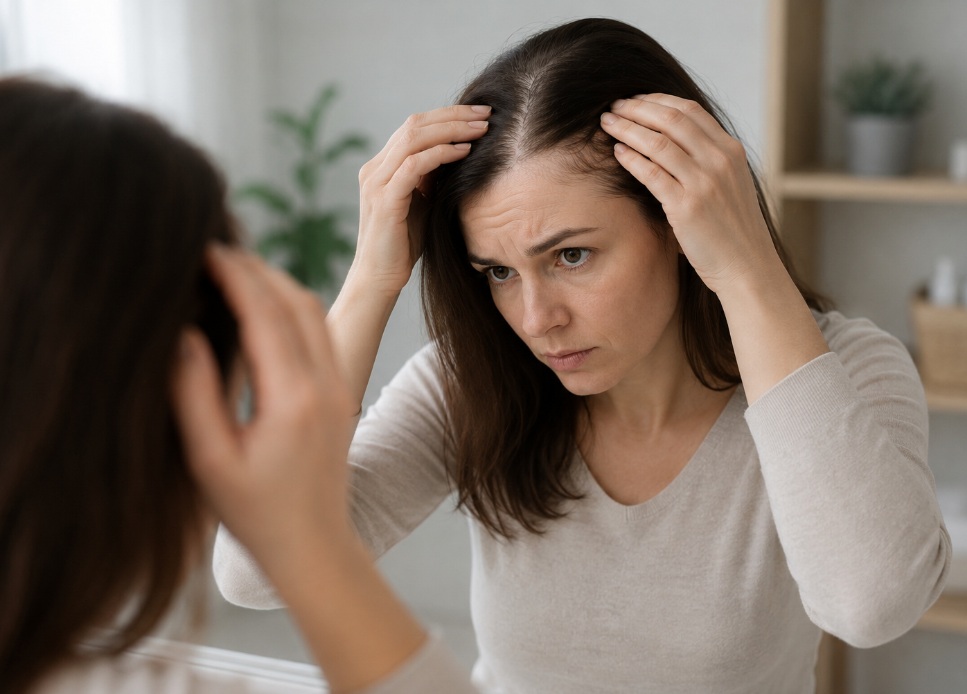
Hair loss can be a distressing experience for women, especially when the cause isn’t immediately obvious. While many people associate thinning hair with ageing, stress or genetics, an underlying thyroid disorder may also play a role.
In fact, thyroid problems are one of the most commonly overlooked causes of hair thinning in women.
If you’ve noticed increased shedding, widening of the parting, or a reduction in hair volume, your thyroid could be worth investigating.
What Is the Thyroid?
The thyroid is a small butterfly-shaped gland located at the front of the neck.
It produces hormones that help regulate many important functions throughout the body, including:
- Metabolism
- Energy production
- Body temperature
- Heart rate
- Growth and repair processes
Because hair follicles are among the fastest-growing structures in the body, they can be particularly sensitive to changes in thyroid hormone levels.
How Can Thyroid Problems Affect Hair Growth?
Both an underactive thyroid (hypothyroidism) and an overactive thyroid (hyperthyroidism) can disrupt the normal hair growth cycle.
Instead of remaining in the active growth phase, more hairs may enter the resting phase prematurely. Several weeks or months later, these hairs begin to shed.
This often results in:
- Increased daily shedding
- Diffuse thinning across the scalp
- Reduced hair density
- Hair becoming dry, brittle or lifeless
Unlike female pattern hair loss, thyroid-related hair loss tends to affect the entire scalp rather than a specific area.
Other Signs of an Underactive Thyroid
Hair loss is rarely the only symptom.
Women with hypothyroidism may also experience:
- Fatigue
- Weight gain
- Dry skin
- Sensitivity to cold
- Brain fog
- Depression or low mood
- Constipation
- Brittle nails
Because these symptoms often develop gradually, many women simply put them down to stress or ageing.
Can Hair Grow Back After Thyroid Treatment?
In many cases, yes.
When thyroid hormone levels are brought back into balance, normal hair growth often resumes.
However, hair grows slowly, and improvements may take several months to become noticeable.
Many women find that while the excessive shedding stops relatively quickly, regaining thickness can take considerably longer.
Supporting Hair Growth Naturally
Medical treatment should always be followed if a thyroid condition has been diagnosed.
However, many women also choose to support their hair health through diet, lifestyle changes and targeted nutritional support.
Nutrients commonly associated with healthy hair growth include:
- Biotin
- Zinc
- Selenium
- Iron
- Vitamin D
- Amino acids
These nutrients help support normal hair growth and may be particularly important if nutritional deficiencies are also contributing to hair thinning.
Can Hair Supplements Help?
Hair supplements cannot treat a thyroid disorder itself, and they should never be viewed as a substitute for medical advice or prescribed treatment.
However, they may help support healthy hair growth while the underlying cause is being addressed.

HR23+ is one example of a non-medicated hair growth supplement designed for both men and women. Unlike prescription treatments, it takes a nutritional approach, combining 23 vitamins, minerals, amino acids and botanical extracts that support normal hair growth and overall hair health.
For women experiencing thyroid-related shedding, products such as HR23+ may provide additional nutritional support alongside appropriate medical care and a healthy diet.
When Should You Speak to Your Doctor?
If your hair loss is sudden, persistent or accompanied by symptoms such as fatigue, weight changes or sensitivity to cold, it is worth discussing your concerns with your doctor.
A simple blood test can often help identify whether a thyroid imbalance may be contributing to your symptoms.
The earlier the underlying cause is identified, the sooner appropriate treatment and support can begin.
The Bottom Line
Thyroid problems are a common but often overlooked cause of hair loss in women.
Both underactive and overactive thyroid conditions can disrupt the normal hair growth cycle, leading to increased shedding and reduced hair density.
The good news is that once thyroid hormone levels are properly managed, hair growth often improves over time.
Alongside medical treatment where necessary, maintaining good nutrition and supporting overall hair health may help encourage stronger, healthier hair growth in the months ahead.
Leave a Reply