
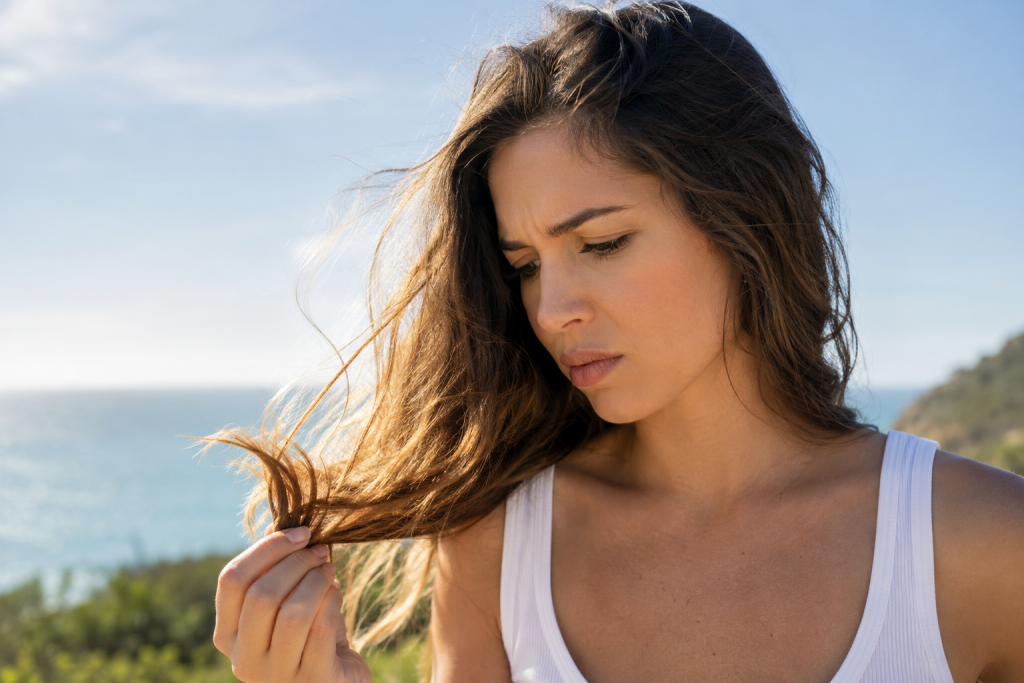
If you’ve noticed more hair in your brush, shower drain, or on your clothes during the summer months, you’re not alone.
Many women report increased hair shedding during summer, often leading to worries that something is wrong. The good news is that seasonal hair shedding is a recognised phenomenon, and in many cases, it is completely temporary.
Understanding why it happens can help you separate normal seasonal changes from signs of a more serious hair loss condition.
Does Hair Really Shed More During Summer?
Research suggests that hair growth and shedding may follow seasonal patterns.
Several studies have observed that more hair follicles enter the telogen (resting) phase during the summer months. Because hairs in the telogen phase are eventually shed, this can lead to an increase in hair fall later in the season.
In simple terms, your hair may naturally go through cycles that make shedding more noticeable during certain times of the year.
While not everyone experiences seasonal shedding, it is common enough that dermatologists and hair specialists regularly hear concerns about it from patients during summer and early autumn.
Why Does Summer Affect Hair?
There is no single explanation, but several factors may contribute.
Increased Sun Exposure
Just as your skin is affected by the sun, your hair and scalp can be affected too.
Prolonged UV exposure may damage the hair shaft, making hair feel drier, weaker, and more prone to breakage. While breakage is not the same as true hair loss, it can create the impression that you are losing more hair than usual.
Heat and Dehydration
Summer heat can place additional stress on both the scalp and hair.
Dehydration may affect overall hair quality, while excessive sweating can lead some people to wash their hair more frequently, increasing mechanical stress from brushing, styling, and towel drying.
Swimming and Chlorine
Regular swimming can leave hair feeling dry and brittle.
Chlorine, salt water, and repeated wetting and drying may weaken the hair shaft over time, leading to increased breakage.
Natural Hair Growth Cycles
Perhaps the most important factor is that hair follicles operate on their own biological timetable.
Many researchers believe that seasonal fluctuations in growth and shedding are partly driven by evolutionary patterns that continue to influence the human hair cycle today.
Hair Shedding vs Hair Loss: What’s the Difference?
This is where many women become concerned.
Seeing more hair fall during summer does not automatically mean you are developing female pattern hair loss.
Normal shedding usually involves:
- Hair falling from all areas of the scalp
- Increased hair in the shower or brush
- No obvious widening of the parting
- No visible thinning patches
Female pattern hair loss often involves:
- A gradually widening parting
- Reduced hair density on the top of the scalp
- Progressive thinning over months or years
- Hair that appears finer and weaker over time
If you are noticing persistent thinning rather than temporary shedding, it may be worth seeking professional advice.
How Long Does Seasonal Hair Shedding Last?
For most women, seasonal shedding is temporary.
Many people notice increased hair fall during summer and early autumn before shedding levels gradually return to normal.
The exact timeframe varies from person to person, but temporary seasonal shedding typically improves as the hair cycle stabilises.
What Can You Do to Support Healthy Hair During Summer?
While you cannot completely control the natural hair cycle, there are several ways to support healthy hair throughout the warmer months.
Protect Your Hair From Excessive Sun Exposure
Wearing a hat or seeking shade during periods of intense sunlight can help protect both the scalp and hair shaft.
Be Gentle With Wet Hair
Hair is most vulnerable when wet.
Avoid aggressive towel drying and minimise excessive brushing immediately after washing.
Stay Hydrated
Proper hydration supports overall health, including the health of your scalp and hair.
Prioritise Hair-Friendly Nutrition
Hair relies on a steady supply of nutrients to grow and maintain strength.
A balanced diet rich in protein, vitamins, minerals, and plant-based nutrients can help support normal hair growth and overall hair health.
Some women also choose to use dedicated hair supplements as part of their daily routine. Products such as HR23+ combine a range of ingredients commonly associated with healthy hair support, including saw palmetto, horsetail extract, nettle leaf, pumpkin seed extract, biotin, zinc, and other nutrients designed to complement a healthy lifestyle.
When Should You Be Concerned?
Seasonal shedding is usually nothing to worry about.
However, you should consider speaking with a healthcare professional if you notice:
- Rapid or dramatic hair thinning
- Bald patches
- Significant scalp irritation
- Hair loss that continues for many months
- A widening parting that continues to progress
Identifying the underlying cause early can often lead to better outcomes.
Final Thoughts
Noticing extra hair shedding during summer can be alarming, but in many cases it reflects a normal seasonal change rather than permanent hair loss.
By taking good care of your hair, supporting your body with proper nutrition, and understanding the difference between shedding and true hair loss, you can approach seasonal changes with greater confidence.
And remember: seeing more hair in your brush for a few weeks does not necessarily mean you are losing your hair. Sometimes, it is simply part of the natural cycle.
Leave a Reply