
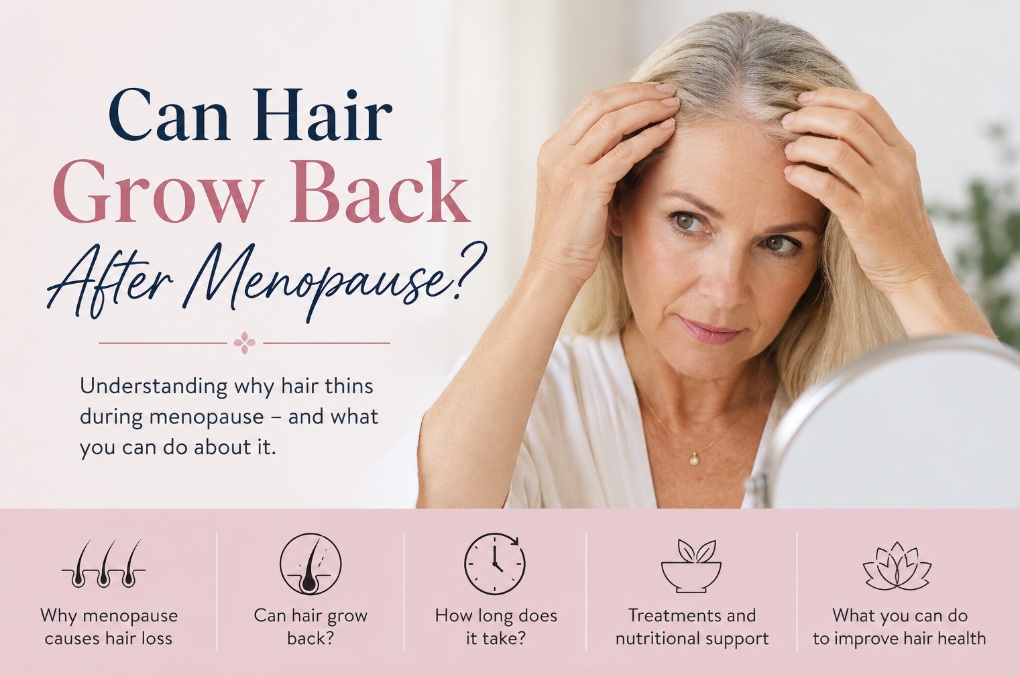
For many women, menopause brings changes that are expected – hot flushes, disrupted sleep, mood swings. What often comes as a surprise, though, is what starts happening in the mirror. The parting looks wider than it used to, the ponytail feels thinner, and the amount of hair left in the shower suddenly seems impossible to ignore.
If you’ve found yourself wondering whether your hair will ever return to how it was before menopause, you’re certainly not alone. The good news is that, in many cases, hair can recover or improve. The answer simply isn’t as straightforward as yes or no.
It all depends on why the hair has become thinner in the first place.
Why does menopause cause hair loss?
During menopause, levels of oestrogen and progesterone naturally decline. These hormones help support the normal hair growth cycle, so when they fall, hair often spends less time actively growing and more time resting before eventually shedding.
At the same time, androgens – often referred to as male hormones, although women produce them too – can begin to have a greater influence. Even if androgen levels haven’t increased, the balance between hormones has changed. This can gradually shrink hair follicles, causing new hairs to grow back finer and shorter than before.
Rather than seeing clumps of hair fall out overnight, most women notice a slow reduction in volume over several years. Hair may lose its fullness around the crown, the parting becomes more visible, and styling becomes increasingly difficult.
Can the hair actually grow back?
Yes, it can.
If the hair follicles are still alive, they are capable of producing hair. The challenge is encouraging those follicles back into producing stronger, thicker strands.
Many women experience noticeable improvement once the underlying cause is addressed. That might mean correcting nutritional deficiencies, managing stress, improving overall health, or using treatments designed to support the hair growth cycle.
However, if hair follicles have become significantly miniaturised over many years, complete restoration is less likely. This is why acting sooner rather than later is often recommended.
It’s not always menopause alone
Although menopause is often blamed, it isn’t always the whole story.
Many women enter menopause with other factors already affecting their hair. Low iron stores, vitamin D deficiency, thyroid problems, rapid weight loss, chronic stress and certain medications can all contribute to thinning hair.
Sometimes menopause simply becomes the tipping point.
If hair loss seems sudden, severe or patchy, it’s worth speaking to your GP, who may recommend blood tests to rule out other possible causes before assuming hormones are entirely responsible.
How long does it take to see improvement?
Hair grows slowly, so patience is essential.
Even after addressing the cause, most people won’t notice obvious changes for several months. New hairs need time to emerge from the scalp and become long enough to contribute to overall thickness.
As a general guide, many women begin noticing reduced shedding after around three months, while visible improvements in density often take six months or longer. Hair continues to improve gradually, so consistency is far more important than expecting quick fixes.
What treatments may help?
The best treatment depends on the individual, but several options have shown promise.
Topical minoxidil remains one of the most widely recommended treatments for female pattern hair loss and is supported by years of clinical research. Some women are also prescribed oral medications by specialists, depending on their medical history.
Alongside medical treatments, it’s worth looking at lifestyle factors that support healthy hair growth. Eating enough protein, maintaining healthy iron levels, managing stress and getting adequate sleep all play an important role in keeping hair follicles functioning as well as possible.
Nutritional supplements may also be helpful, particularly where the diet is lacking or increased nutritional support is needed. Products such as HR23+, which contain a broad range of vitamins, minerals, amino acids and botanical ingredients linked to normal hair health, are often used as part of a longer-term approach alongside a healthy lifestyle.
What about hormone replacement therapy (HRT)?
Some women notice an improvement in their hair after starting HRT, while others see little change.
Because hair loss has many possible causes, HRT should never be viewed as a guaranteed solution. It may help where hormonal changes are the primary driver, but it isn’t specifically prescribed as a hair loss treatment and won’t reverse every type of thinning.
This is something best discussed with your GP or menopause specialist, who can assess whether HRT is appropriate for your overall health rather than focusing solely on hair.
Is it possible to prevent menopause hair loss?
There isn’t a guaranteed way to prevent it, but there are steps that may reduce its impact.
Looking after your general health, eating a balanced diet rich in protein, avoiding crash diets, treating any nutritional deficiencies promptly and seeking advice when thinning first becomes noticeable can all make a difference.
Many women wait years before seeking help, assuming hair loss is simply something they have to accept. In reality, earlier intervention often leads to better outcomes.
The bottom line
Hair thinning after menopause can be upsetting, but it doesn’t automatically mean you’ve reached the end of the road.
In many cases, hair can become healthier, thicker and fuller again, particularly when the underlying causes are identified early and managed appropriately. While complete restoration isn’t always possible, significant improvement is achievable for many women with the right combination of treatment, nutrition and patience.
If you’ve recently noticed your hair becoming thinner after menopause, don’t ignore it or assume it’s simply part of getting older. The sooner you understand what’s happening, the sooner you can start giving your hair the support it needs.
If you’re looking for additional nutritional support, HR23+® has been developed specifically to help support healthy hair growth from within. Its comprehensive formula combines 23 carefully selected vitamins, minerals, amino acids and botanical ingredients that work together to nourish normal hair follicles and support the hair growth cycle. While no supplement can promise to reverse every type of hair loss, many women choose HR23+® as part of a long-term routine alongside a healthy diet and healthy lifestyle to give their hair the best possible support.

Leave a Reply