
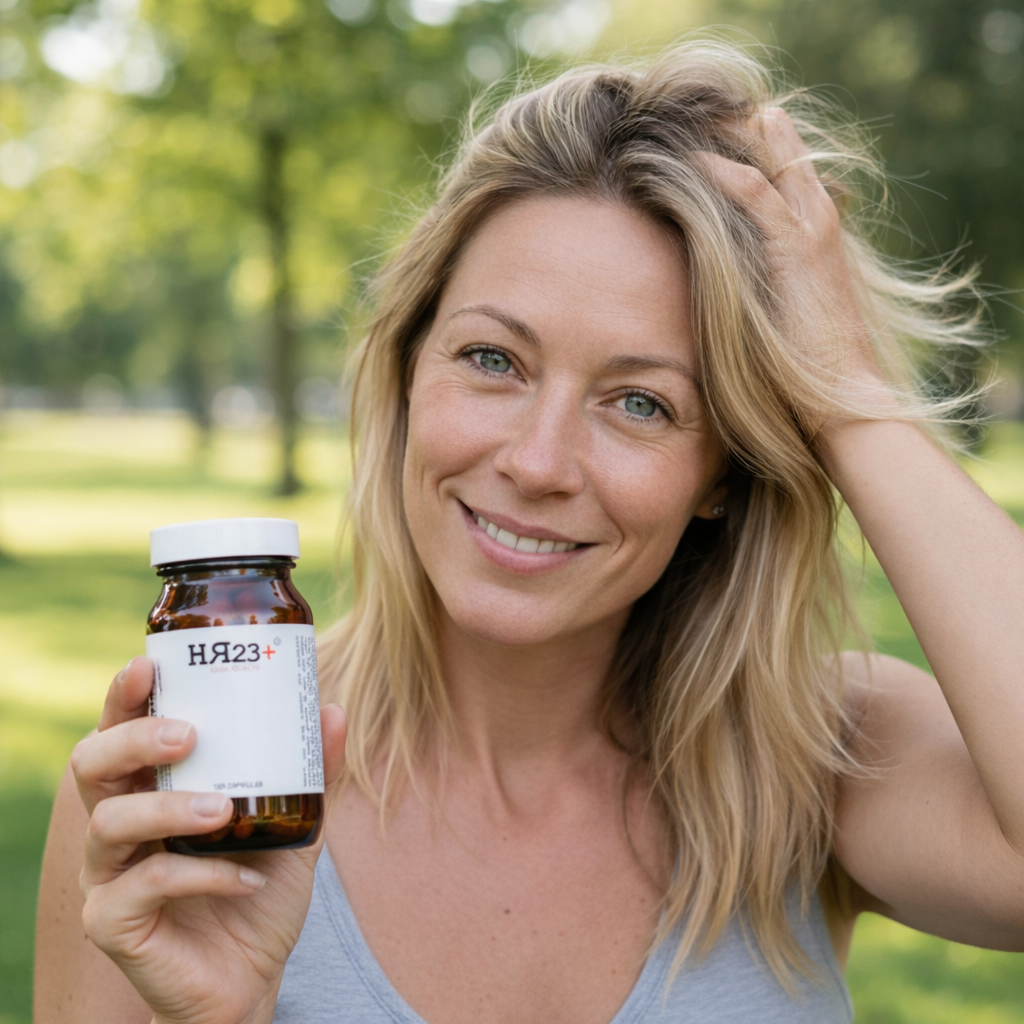
“I thought my hair was just… gone.”
“I’m 52, and about a year into menopause, I noticed my ponytail felt thinner. At first, I ignored it. But then the shedding started—hair on my pillow, in the shower, everywhere.
It honestly knocked my confidence.
I tried different shampoos, oils… nothing really worked. Then I came across HR23+. I wasn’t expecting miracles, but within a couple of months, the hair fall slowed down. That was the first big win.
Then came the real surprise… my hair actually started to feel thicker again. Not overnight—but gradually, it felt stronger, fuller.
Now? I still have menopause. But I don’t feel like I’m losing my hair anymore.”
— Sarah, 52
Why Does Hair Thin During Menopause?
If you’re experiencing thinning hair during menopause, you’re far from alone. In fact, it’s one of the most common—but least talked about—symptoms.
The root cause comes down to hormonal changes.
During menopause, levels of oestrogen and progesterone drop significantly. These hormones play a key role in keeping hair in its growth phase. When they decline, hair:
- Grows more slowly
- Falls out more easily
- Becomes finer and weaker
At the same time, androgens (male hormones like DHT) can have a stronger effect, shrinking hair follicles and leading to gradual thinning—especially around the parting and crown.
This is known as female pattern hair loss, and it becomes far more common during and after menopause.
How Common Is Menopause Hair Loss?
The numbers might surprise you—and reassure you.
- Around 40–50% of women experience noticeable hair thinning during menopause
- Some estimates suggest this rises to 65% during and after menopause
- Studies show over 50% of postmenopausal women experience hair loss
- In some cases, up to 80% of postmenopausal women are affected
In short: this is completely normal—but that doesn’t mean you have to accept it.
What Does Menopausal Hair Thinning Look Like?
Unlike male hair loss, which often leads to bald patches, menopause-related hair loss is usually more subtle—but just as distressing.
You might notice:
- A widening part
- A thinner ponytail
- More hair in the shower or brush
- Reduced volume and density
- Slower regrowth
For many women, it’s not about going bald—it’s about losing that feeling of thickness and vitality.
The Hidden Triggers Making It Worse
Hormones are the main driver—but they’re not the only factor.
Menopause often overlaps with other triggers that accelerate hair thinning:
1. Nutrient Deficiencies
Lower levels of key nutrients (like iron, zinc, biotin, amino acids) can weaken hair follicles.
2. Stress & Cortisol
Midlife stress, sleep disruption, and hormonal imbalance can push more hairs into the “shedding phase.”
3. Reduced Blood Flow
Circulation to the scalp can decline with age, meaning follicles receive less oxygen and nutrients.
4. Inflammation
Chronic low-grade inflammation can disrupt the hair growth cycle.
Why Most “Hair Products” Don’t Work
A big mistake many women make?
Trying to fix an internal problem externally.
Shampoos, oils, and conditioners can improve the appearance of hair—but they don’t address what’s happening at the follicle level.
That’s why so many women feel like they’re “trying everything”… with little real change.
Supporting Hair From Within
To truly address menopausal hair thinning, you need to support:
- The hair growth cycle
- The follicle environment
- The nutritional foundation of hair
This is where targeted supplementation can play a powerful role.
HR23+ is designed specifically to support healthy hair growth by combining key nutrients and botanical ingredients that work from within, helping to:
- Reduce excessive shedding
- Support stronger, thicker hair strands
- Promote healthier hair growth cycles
Can You Actually Regain Thickness?
This is the question most women really want answered.
The truth is:
- You may not return to your exact hair from your 20s
- But you can significantly improve thickness, strength, and fullness
Many women notice that once shedding slows down, the real transformation begins:
Your hair starts to feel like “yours” again.
What To Do Next (If You’re Noticing Thinning)
If you’re currently dealing with menopausal hair loss, here’s a simple starting point:
1. Don’t Ignore It
The earlier you act, the better your chances of maintaining thickness.
2. Focus on Internal Support
Think beyond shampoos—look at nutrition and supplementation.
3. Be Consistent
Hair growth takes time. Most meaningful changes happen over 8–16 weeks.
4. Reduce Stress Where Possible
Even small changes can help stabilise hair shedding.
Final Thoughts
Menopause brings a lot of changes—but losing your hair confidence doesn’t have to be one of them.
Hair thinning during this stage of life is incredibly common—but it’s also manageable, and often reversible to a meaningful degree with the right approach.
As Sarah put it:
“It wasn’t about chasing perfect hair… it was about feeling like myself again.”
If you’re currently experiencing thinning hair during menopause, you can learn more about how HR23+ supports hair growth here:
👉 https://hr23.co.uk/hair-loss-treatment-for-menopause-hair-loss
Leave a Reply